The Most Expensive Mistake in Paid Social Isn't the Ad. It's What Happens After.
Most teams obsess over the wrong thing.
They spend weeks on creative strategy. They run three rounds of feedback on the script. They debate hook variations for hours. Then they ship the ad — and nobody checks whether the landing page still says “Book a demo” when the ad promises a free trial.
I’ve been talking to paid social practitioners for the past few weeks. Creative strategists, media buyers, agency operators. I wasn’t pitching anything. I was just asking where things break.
The same gap kept appearing, in almost every conversation.
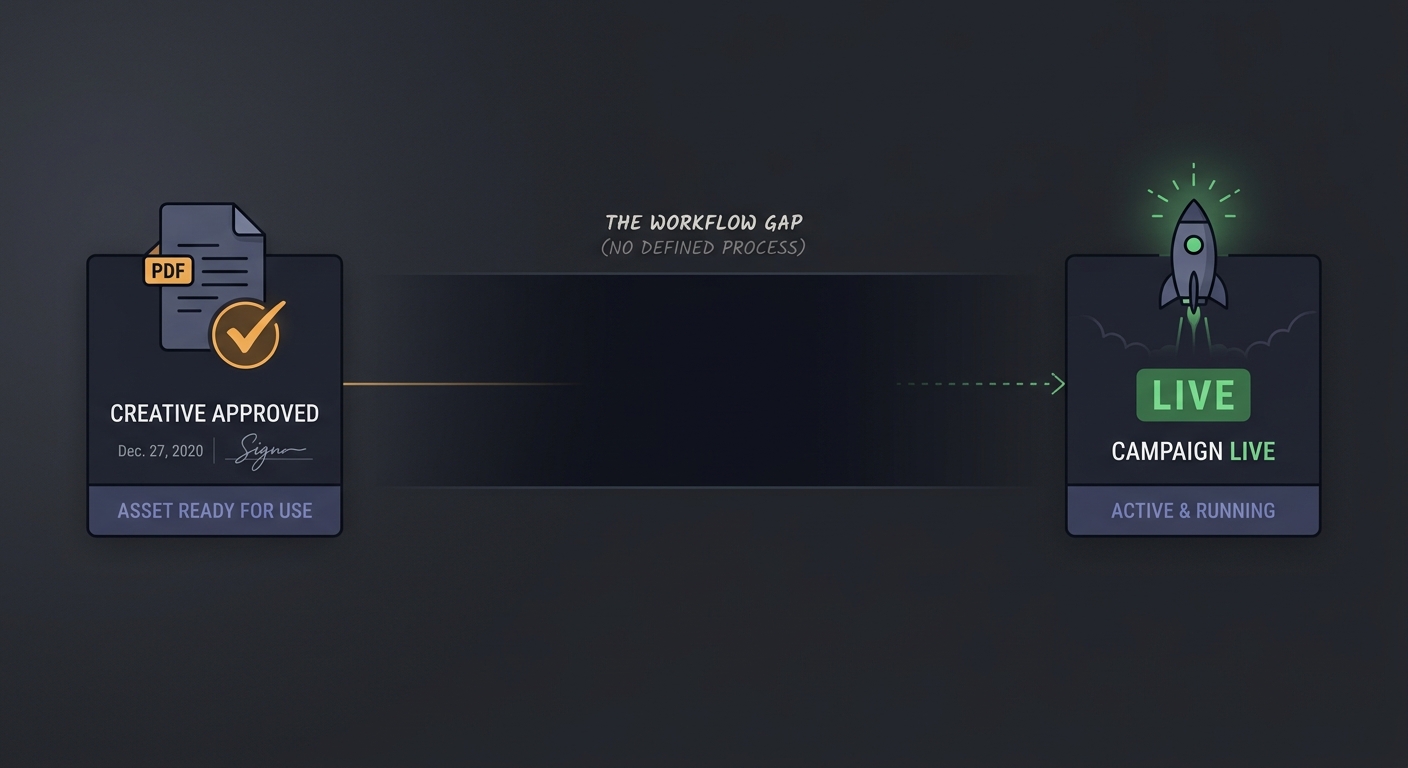
Most teams have a strong process for making ads. Almost none have a process for the moment after production ends and before the campaign goes live.
That gap — two days, maybe three — is where campaigns quietly bleed out.
The data is striking.
One practitioner who audits paid campaigns for 45+ brands shared this: in a recent audit of 30 Meta ad landing pages, 26 had message mismatch. The ad said one thing. The landing page said something else.
26 out of 30.
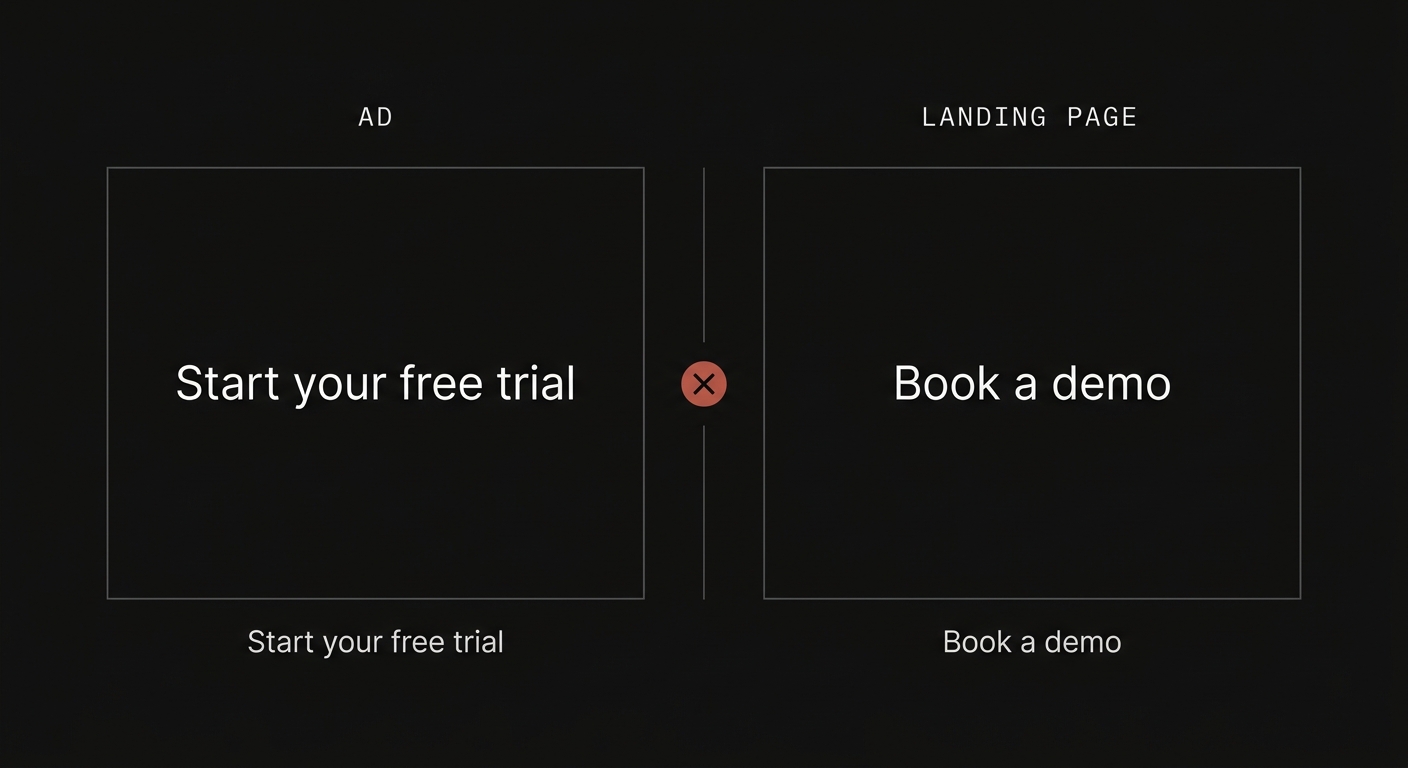
The most common version: ad says Start your free trial. Landing page says Book a demo.
That two-second moment of confusion is where 30–40% of conversions disappear — silently, with no error message, no alert. Just a bounce. By the time the data shows something’s wrong, you’ve already spent the budget.
It gets worse. Meta’s algorithm reads post-click behavior. A landing page that confuses visitors signals a low-quality experience. Over time, that drives up CPM and CPC across every subsequent campaign. You think you have a targeting problem. Meta thinks you have a relevance problem. Both of you are wrong about why.
Here’s the part that surprised me most.
When I asked practitioners why this check doesn’t happen, nobody said they didn’t know to do it. Everyone knew.
The answer was simpler: “It’s just folks juggling so much stuff around that it just doesn’t surface.”
This isn’t a knowledge problem. It’s a workflow problem.
The difference between teams that catch this and teams that don’t isn’t experience or discipline. It’s structure. The teams that consistently catch pre-launch errors didn’t build a culture of carefulness. They built a mandatory checkpoint — a moment in the process where someone is required to stop and ask: what could go wrong here that we haven’t checked?
One agency operator described the shift: “The way we turned this around was by mandating the project management updates, logging, and rigorous QA process.”
Mandating. Not encouraging. Not hoping. Mandating.
And then AI made this harder.
AI is compressing the front end of creative production. What used to take two weeks — analyzing top performers, generating hooks, scripting, concepting — now takes 20 minutes.
That’s remarkable. It’s also a trap.
When you can produce 10x more creative, the pre-launch checkpoint doesn’t get 10x easier. It gets 10x more consequential. Spec errors multiply. LP mismatches multiply. Missing disclosures, off-brand claims, outdated offers — all of it scales with the volume.
The industry has started talking about the AI Creative Director: the human who directs AI output, decides what to test first, brings judgment to scale. That role is real and it’s emerging fast.
What nobody is talking about yet is what that role needs at the last mile — between production finishing and campaign going live. A moment of structured review that matches the pace of AI-driven production.
Four things I keep hearing, across every conversation:
The feedback loop isn’t closing. Revisions happen — but the reason for the revision almost never gets documented. The same mistake appears in the next brief, and the one after that. Teams work hard and learn nothing.
Video is the unsolved problem. Image ads are easier to audit — you can compare side by side, run them through tools. Video review is still mostly manual, and the volume is growing faster than anyone’s ability to review it.
The checklist exists. The moment doesn’t. Most experienced practitioners know exactly what to check before launch. What’s missing is a designated point in the workflow where that check is supposed to happen — before the budget starts running.
Skipping costs more than you think. A mismatched landing page doesn’t just lose the conversion. It teaches Meta’s algorithm that your ads produce low-quality experiences. You pay for that lesson on every campaign that follows.
The fix isn’t more effort.
The teams that have solved this didn’t try harder. They didn’t build a culture of diligence. They built a gate — a hard stop between “production done” and “campaign live” where a specific checklist runs, every time, no exceptions.
The most expensive mistakes in paid social aren’t made during production. They’re made in the quiet days after production ends, when everyone assumes someone else already checked.
Nobody checked.
I’m building in the paid social creative workflow space and talking to practitioners about where the real friction is. If any of this resonates — or if you’ve seen this play out differently — I’d genuinely like to hear it.